Rise of the Ocean Metropolis
Purchased by Mitsubishi in 1890, Hashima was built to tap into rich undersea coal deposits stretching deep beneath the seabed. To protect against ferocious typhoons, massive seawalls were constructed around the perimeter, giving the island the silhouetted profile of a dreadnought battleship.
By 1959, the 16-acre island housed over 5,200 residents. It recorded the highest population density ever documented on Earth—over 83,000 people per square kilometer. Workers lived in Japan's first reinforced concrete high-rise apartments, complete with rooftop gardens, primary schools, movie theaters, and subterranean shopping arcades.
- • Primary Function: Undersea Coal Extraction Shafts (1,000m depth)
- • Peak Population: 5,259 Residents (1959)
- • Evacuation Order Date: January 15, 1974
- • Current Status: UNESCO World Heritage Site (Restricted Access)
The Overnight Exodus
As petroleum replaced coal across Japan during the post-war energy transition, the mine became economically unviable. In January 1974, Mitsubishi officially announced the closure of the facility. By April 20, 1974, the last remaining resident stepped off the ferry, leaving behind fully furnished apartments, schoolbooks on desks, and domestic electronics on tables.
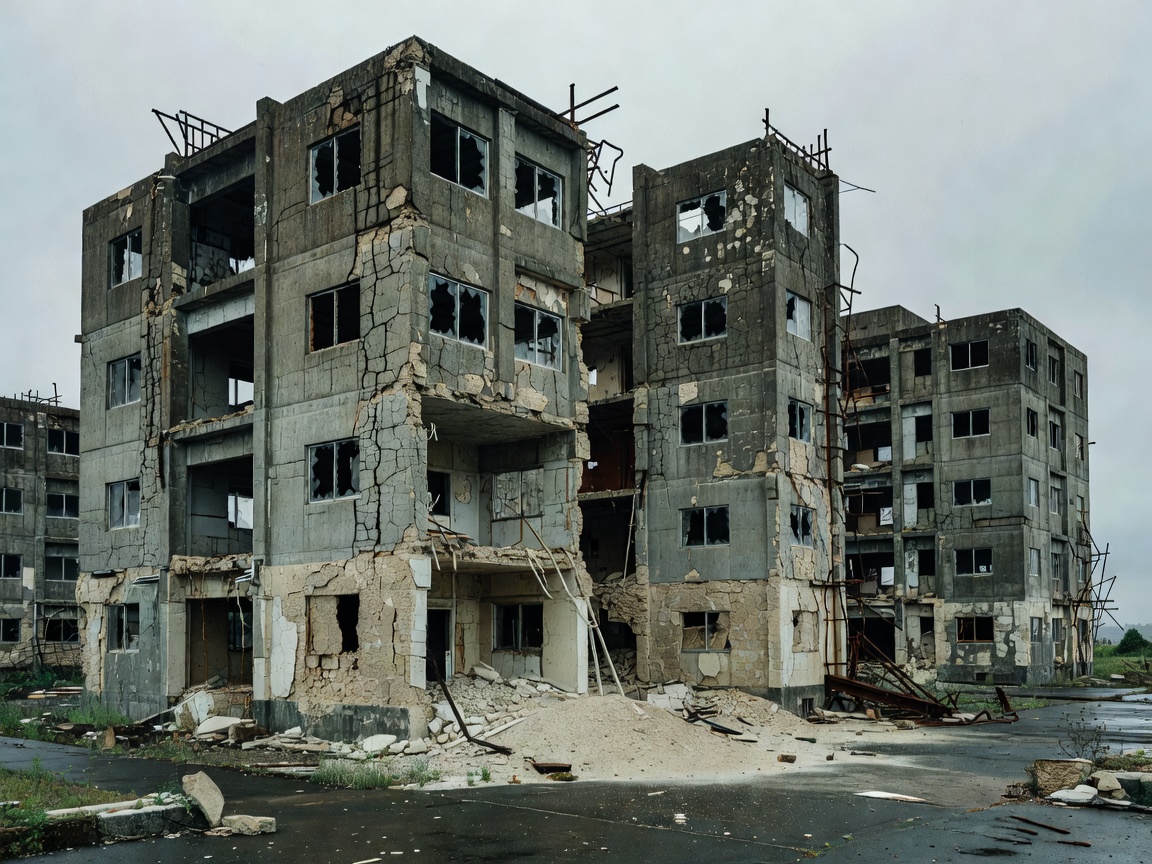
For decades, salt spray and typhoons battered the concrete structures. Wall plaster flaked away, metal staircases collapsed into rusted cascades, and nature slowly reclaimed the sea walls.
Field Observation Notes
Visual inspections show severe structural spalling along Block 30, Japan's oldest concrete residential building. Floorboards have collapsed beneath decaying tatami mats, exposing structural rebar directly to ocean air. The soundscape is dominated by breaking waves and whistling wind through shattered elevator shafts.